by Bella Angela Del Rio
All entrepreneurs have a mentor, whether that’d be a parent, professor, fellow entrepreneur, or one from an incubator. Mentors play an important role in molding the mindset of startup founders. Just as a child has a parent to teach them how to walk, an entrepreneur has a mentor to guide them on their journey.
We went behind the scenes with two of our Impact Boost Camp mentors Anja Teehankee, Incubator Manager of the Convergent Resilience Technology Business Incubator (CONRES TBI), and Shearyl Arenas, Project Leader of Nurture Innovation Technology Revolution Office (TIP NITRO TBI), who unpacked the role of incubators and mentors in molding young entrepreneurs and their best practices in coaching student startups.
Read on to understand how these mentors are shaping our future entrepreneurs and leaders.
Focusing on the bigger picture
Every mentor has their own unique facilitation style, some are hands-on and some are technical, but one thing is for sure, mentors are there to guide an individual by sharing their insights, listening to ideas, and grounding the startup when goals are starting to veer away from the objectives of the business.
Anja Teehankee: There are two types of mentors- the generalists, who really guide the incubatee through the process; and the specialists, who have a very clear area of expertise where they can really go in-depth.
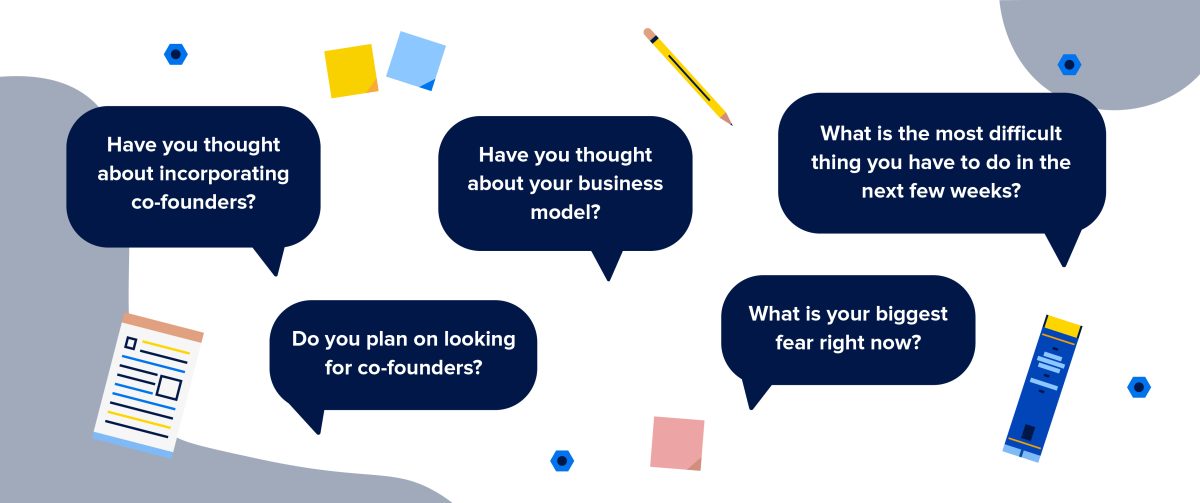
I am a generalist. For me, it is about looking at the bigger picture, looking at the process from where they are today and where they want to be. It is really trying to help them through the challenges they have and understanding what their objectives and goals are. As a mentor, I am there to nudge, listen, and ask a lot of questions; and hopefully, the thoughts that are generated through that will help them focus on what they want to do, where they want to be, and the decisions they have to make.
Shearyl Arenas: There is always something to learn when I mentor an incubatee, because each of them is different, they have different needs, and there are different approaches when coaching or mentoring them. We are non-directive, we are there to give advice, and it is up to them whether they accept it or not.
What I have learned about technology-based incubators, is we need to strengthen how to include social impact and the awareness of impact in the venture. Similar to other engineering students who are CEOs, they usually focus more on technology, as compared to incorporating social impact. We need to have many lessons, lectures, and activities for them to understand and connect their venture to the SDGs.
Learning is not a one-time thing
In school, students have to go to the classroom to learn. In life, the world becomes a classroom. Rather than learning from professors, we learn from the diverse group of people we meet. An interesting concept to look at is the process of unlearning to learn and adapting to the changing environment.
Anja Teehankee: I still have a lot to learn, but that is the great thing about being a mentor, every day it is challenging, every day I realize that there are things that I don’t know yet.
Shearyl Arenas: I need to improve my craft. I learned a lot about entrepreneurship from attending several workshops and seminars, and here comes another language about social impact and social innovation. Before the terminologies were about pivoting and building traction, now there is another buzzword in the ecosystem focused on social impact.
We need to move fast and adapt to the changing environment in the startup ecosystem. Our engineering students were initially trained by providing the problem and them creating a solution. Now, Technopreneurship also considers social impact and the impact of innovation on society.
As mentors, we need to teach our incubatees to start with the problem rather than starting with the solution, and then iterate if needed. We need to do the same, if our mentorship style works for one team and does not work for another, we too have to iterate our methods in mentoring.
Delivering the hard truths
Dr. Esther Obonyo, one of our Visiting Professors from the Pennsylvania State University talked about, “noble failure”, it is embracing that failure is inevitable, and should be seen as a signal to pivot. Entrepreneurs are innovative and creative which is highly commendable, but should also be open to failure and feedback.
[READ MORE: Incubate the Future: Building Back Better University-based Technology Business Incubators]
Anja Teehankee: Part of being a mentor is just simply being honest. As mentors, it would come to a point when handling our incubatees, we say that “the project is not good to do at this time, it is not innovative enough for the market,” or “this is not something that is worth investing your nights or your weekends while studying because it doesn’t seem like there is enough need for it.”
Shearyl Arenas: I believe that yes, entrepreneurs may have the aspiration to solve the world’s problems, but they should also remember that they can only contribute so much to solve those problems that we face.
Anja Teehankee: When our incubatees are met with failures, we must remind them that it shouldn’t be a reason to be in despair or become discouraged. Especially for our young ones that hit a roadblock, or had a bad interview with a potential customer, I can definitely see that everything for them breaks down. They suddenly think, “Oh this is never going to work,” or “it was such a bad idea,” just because one person had bad feedback. We must bring them back.
Being a mentor is quite challenging, there are several techniques and styles to mentoring a startup, especially student-run businesses, but mentorship is not a practice that follows a specific instructional guide. It is something that should be practiced and continuously innovating based on new techniques and new experiences acquired.
Our two mentors come from different university-based Technology Business Incubators in the Philippines, you may learn more about the basics of how incubators are run and how they can enable the success of startups and social enterprises.
[READ MORE: [INFOGRAPHIC] Basics of Running a Business Incubator]